Seth, Jacinda and Steven on People Centered Leadership
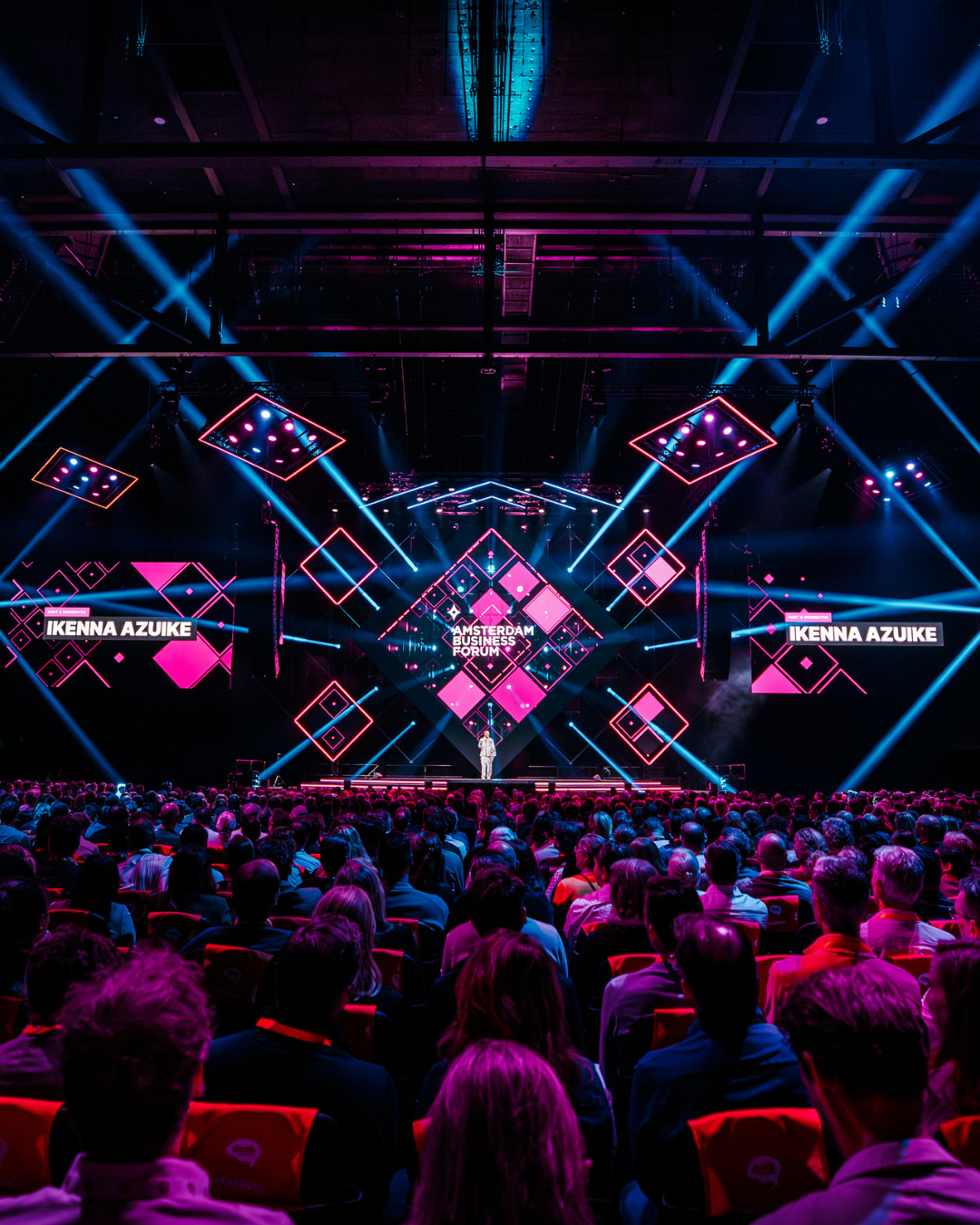
Seth Godin, Jacinda Ardern and Steven Bartlett take the stage at Amsterdam Business Forum 2026. We looked at the ideas that connect three very different thinkers. What do they teach us about people-centred leadership?


Seth Godin, Jacinda Ardern and Steven Bartlett will all be speaking at Amsterdam Business Forum 2026 on 18 September. Three very different thinkers. But pull on the thread of what each of them actually believes, and you land in the same place:
"Organisations that thrive are the ones built around people, not in spite of them."
In this blog, our favorite insight from each speaker. On this very topic. Fresh, hands-on and actionable.
Seth Godin on humans in a world of AI
Idea: depth is your edge. Not speed.
AI is fast. It handles routine tasks, scales instantly and costs almost nothing per output. Which means the moment your work looks like a routine task, you are competing on the wrong terms.
Seth Godin’s argument is deceptively simple. The people who matter are the ones who invest genuine thought, time and judgment into their work. Not because that is admirable, but because it is the one thing that remains irreplaceable. When anyone can press a button, the value shifts entirely to the person who knows what the button is for.
The question is not whether AI will change your role. It will. The question is what you bring that makes depth possible. That is the work worth doing.
“If all that’s needed is the push of a button, we can find someone cheaper than you to push it.”
Jacinda Ardern on leading with empathy
Idea: empathy is a choice. And it is harder than it looks.
The persistent myth about empathetic leadership is that it comes naturally to some people and not others. Ardern dismantles that. Choosing to remain open to the experiences of others, especially under pressure, is an act of will. It exposes you to things that are easier to look away from. It invites criticism. It asks you to stay present when closing down would feel safer.
Ardern was told for years that her style was a liability. Too soft. Not forceful enough. She never accepted the premise. Her response to the Christchurch attacks in 2019 made the case better than any argument could: empathy and decisive action are not in tension. They belong together. One gives the other its credibility.
The leaders who get this right do not become less effective. They become harder to replace.
“It takes courage and strength to be empathetic. I refuse to believe that you cannot be both compassionate and strong.”
Steven Bartlett on building organisations around people
Idea: your culture is what you hire. Not what you write on the wall.
Most organisations know what they want their culture to be. The gap is between the statement and the daily reality. Bartlett’s focus is on closing that gap, and his answer is less about values workshops and more about hiring decisions.
His view is straightforward: every person you bring in either strengthens what you are building or slowly erodes it. There is no neutral hire. Which is why he reportedly spends half his time on recruitment, not because he is indecisive, but because he treats it as the most consequential thing a leader does. Get the people right, and culture takes care of itself. Get them wrong, and no amount of offsite planning will fix it.
The factory, in his analogy, always matters more than the product. Build the right environment, and great work follows.
“If the company culture is strong, new people will become like the culture. If the company culture is weak, the culture will become like the new people.”
See them live
Three perspectives. One theme. On 18 September, Seth Godin, Jacinda Ardern and Steven Bartlett take the stage together at Amsterdam Business Forum 2026, alongside Ahmed Aboutaleb, Eva de Mol and Diana Kander.
One day. 3,000 leaders. The ideas that actually change how organisations work.