Jacinda Ardern on empathetic leadership: 5 strong ideas
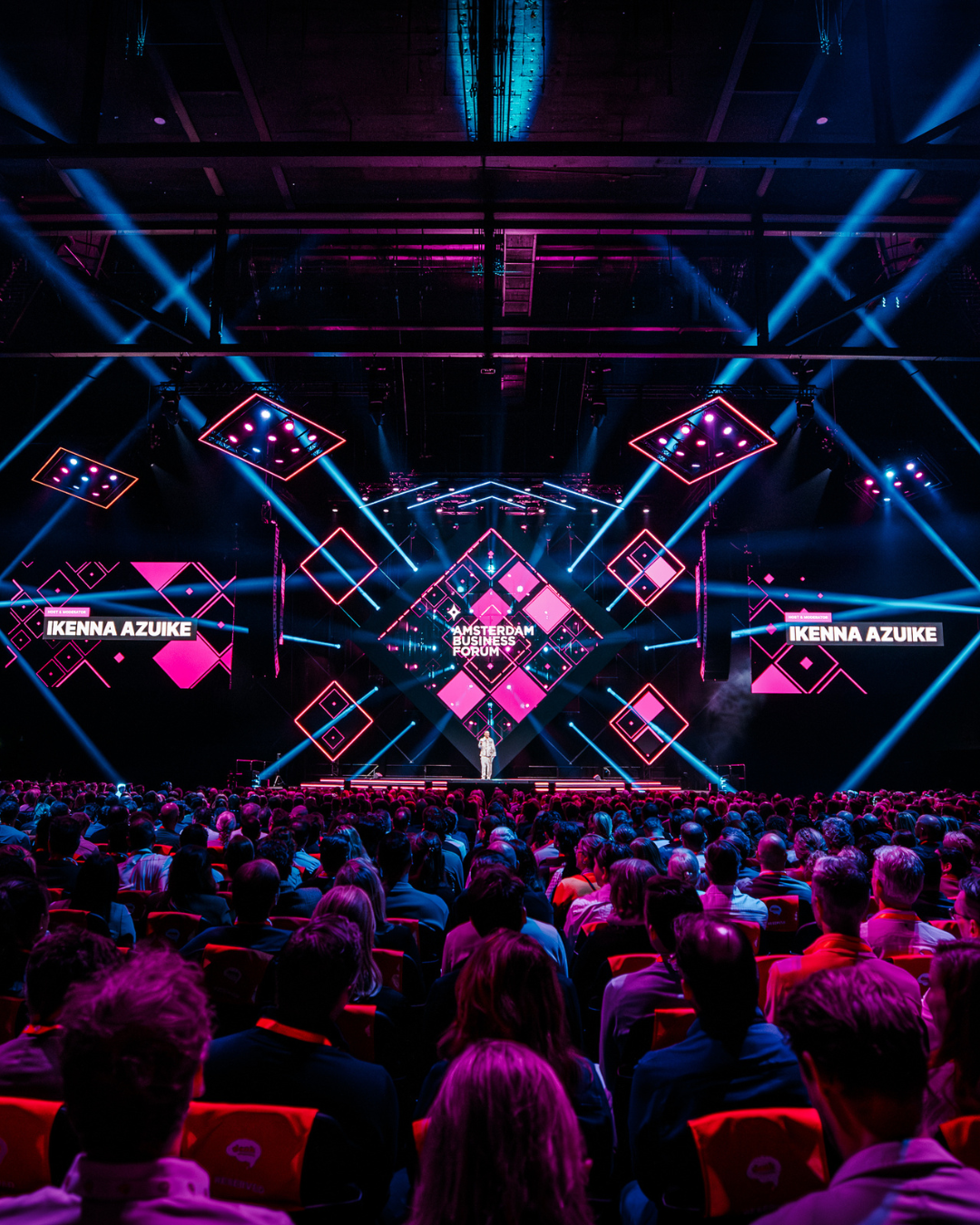
Jacinda Ardern takes the stage at Amsterdam Business Forum 2026. So we went back to the moments that changed leadership. What does Ardern teach us about empathy under pressure?


She led a country through a terrorist attack, a volcanic eruption and a global pandemic. Without aggression. Without performance. With clarity, empathy and the kind of courage most leaders never have to find within themselves. The Rt. Hon. Dame Jacinda Ardern did not just talk about a different kind of leadership. She showed what it looked like under pressure.
On 18 September, she will take the stage at Amsterdam Business Forum 2026, centred around People Centered Leadership. We went looking for the ideas behind the headlines.
Five insights. Verified quotes. And one moment from March 2019 that changed how the world thinks about what leaders are for.
Insight 1: Empathy takes guts.
“It takes courage and strength to be empathetic. I’m very proudly an empathetic and compassionate leader.”
That is not a defence. It is a challenge.
Most leadership cultures still treat toughness and kindness as opposites. Ardern spent years being told she was too soft, not assertive enough, somehow diminished by the fact that she cared. She pushed back every time.
Her argument is straightforward: genuine empathy is not passive. It means being present with things that are hard to be present with. It means staying open when closing down would be easier. That takes more strength than most definitions of strength allow for.
“I refuse to believe that you cannot be both compassionate and strong.”
That line is not idealism. For Ardern, it was a working principle, tested in the hardest possible circumstances.
Insight 2: Feeling is not enough.
“Empathy is nothing without action.”
She said this to Monocle while reflecting on Christchurch. It may be the clearest thing she has ever said about leadership.
After the attacks on 15 March 2019, she flew to the families. She embraced people. She wore a headscarf as a mark of respect. She cried. She never said the attacker’s name publicly, refusing to give him what he wanted.
And then she acted. Ten days after introducing the legislation, New Zealand’s parliament passed sweeping gun reform. More than 50,000 firearms were handed in.
That sequence matters. Empathy came first and made the action credible. Action came second and made the empathy real. One without the other is either sentiment or force. Together, they are leadership.
Insight 3: The most powerful person in the room is often the quietest.
“Leadership is not about necessarily being the loudest in the room, but instead being the bridge, or the thing that is missing in the discussion, and trying to build a consensus from there.”
This one lands differently depending on the room you are sitting in.
Ardern is describing something active. Being the bridge means reading what is absent from a conversation, not only what is present. It means understanding what different parties actually need, rather than simply what they are saying. And it means being willing to give up the spotlight in exchange for a better outcome.
She demonstrated this during the M. bovis outbreak, a cattle disease that threatened New Zealand’s farming industry. Rather than imposing a response, she brought agricultural leaders into the room and worked through the crisis with them. They arrived at a shared decision. New Zealand is now halfway through a ten-year eradication plan that actually has the support of the people doing the work.
Consensus takes longer. It also tends to last.
Insight 4: Good humans make good leaders. That is not a coincidence.
“The values of being a good human should be the values of being a good leader.”
Ardern said this in TIME, responding to the idea that empathetic leadership is a women’s issue. Her answer was simple: it is not a gender issue. It is a values issue.
We teach children curiosity, generosity, and the ability to listen. We teach all of them. Then somewhere along the way, the assumption kicks in that leaders are supposed to leave those qualities at the door.
Ardern’s point is that leadership should be a deepening of those qualities, not a departure from them. That reframes the whole question of who gets to lead: not the person who performs strength most convincingly, but the person who has grown into their own values most fully.
Insight 5: Ask the human question. Every time.
“I was constantly trying to ask: how do we remember the human experience in all of this?”
She said this at Harvard, looking back on how she approached the crises she faced. It sounds simple. That is the point.
Every organisation has a pull toward abstraction. Strategy, process, metrics, timelines. Those things are necessary. But Ardern kept adding one more question: what does this mean for the actual people on the other end of this decision?
Not as a final check. As the starting point.
That habit does not require a crisis to be useful. It works in a budget meeting, during a restructure, or in a one-to-one where someone is not performing. Ask what the human experience is, and the answer often becomes clearer.
One moment. 15 March 2019.
A gunman attacks two mosques in Christchurch. Fifty people are killed during Friday prayers.
While the news is still breaking, Ardern sits down with a piece of paper and writes four sentences. The last one is: “They are us.”
The next morning she flies south. She has no headscarf. She borrows one from a friend, puts it on and walks into a room full of grieving people. She places her hand on her heart and says, “As-salamu alaykum.” Peace be upon you.
She holds people. She cries. She does not say the attacker’s name. Not that day. Not ever in public. She will not give him the attention he sought.
Ten days later, the legislation she drafted passes through parliament. More than 50,000 guns are handed back.
A photograph taken that day, Ardern in a black headscarf, arms around a woman who has just lost someone, the word “peace” visible above them, was projected onto the Burj Khalifa in Dubai. It became an image that travelled everywhere.
Not because it was striking. Because it was true.
One more thing
Ardern stepped down as Prime Minister in 2023. She cited burnout and the weight of the role. That honesty was itself a leadership act.
She has since founded the Field Fellowship for Empathetic Leadership, and continues to make the case that the world needs leaders who are built differently. Not tougher. More human.
On 18 September, she brings that case to Amsterdam. One stage, one day, one theme: People Centered Leadership. She will be joined by Seth Godin, Steven Bartlett, Ahmed Aboutaleb, Eva de Mol and Diana Kander. More about Amsterdam Business Forum 2026 →