9 gems from Seth Godin's blog on People Centered Leadership
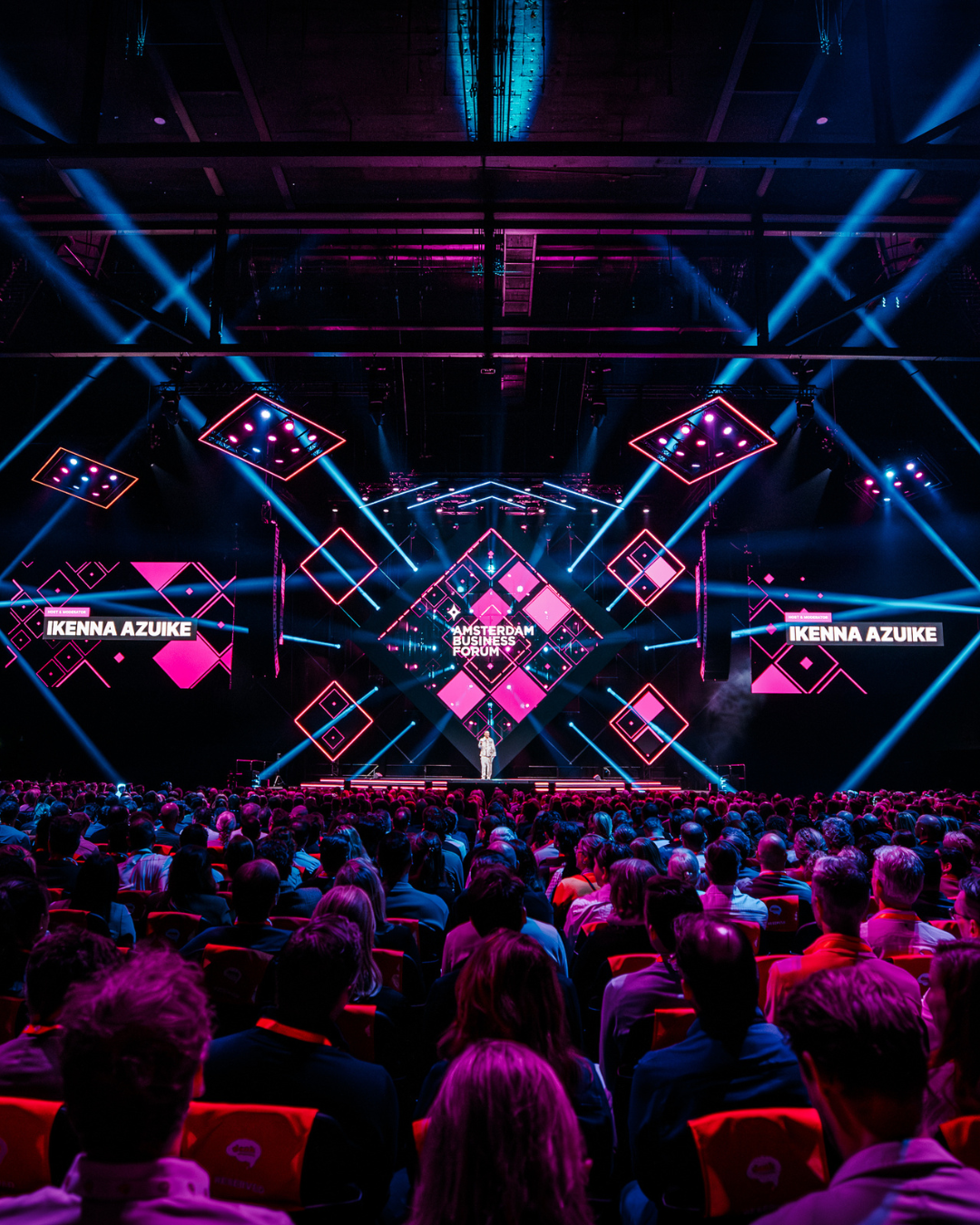
Seth takes the stage at Amsterdam Business Forum 2026. So we went digging in his archive. What does Seth say about humans in an AI-driven world?


Over 10,000 blog posts. One blogpost every single day, for over 25 years. That’s Seth Godin. Short, punchy, and always worth reading. His blog is one of the richest thinking resources on leadership, organizations, and what it means to do meaningful work.
On September 18th, Seth takes the stage at Amsterdam Business Forum 2026. The theme: People Centered Leadership. So we went digging in his archive. What does he say about humans in an AI-driven world? About leading with empathy? About organizations that have lost sight of the people inside them?
Here are 9 posts worth your time. Grouped around the three themes of ABF 2026.
ABF Theme 1: The human role in digital organizations
AI is getting faster and smarter by the day. But speed and intelligence aren’t the same thing as wisdom, judgment, or care. What does the rise of AI actually mean for what humans bring to the table?
Gem 1: The AI effort gap
We’re weirdly impatient with AI. One prompt. No result. Broken.
But we don’t expect a PhDi n a day. Or a great book in a week. Why should AI be any different?
Seth’s point is sharper than it looks: if all a task requires is pressing a button, someone cheaper will always press it. The humans who matter are the ones who bring depth. Who think harder, longer, and more carefully than the tool ever could.
That’s not a threat.That’s a direction.
Gem 2: Better than thecheap alternative
Frozen pizza didn’t kill great restaurants. It killed average ones. Seth asks the uncomfortable question: if AI can do what you do faster, cheaper, at 3am, what exactly is your edge? Not in theory. Right now.
Racing to the bottom is a losing strategy. The problem is, you might get there first.
Gem 3: The next generation of AI businesses
Gen 1 AI was about capability. Gen 2 is about efficiency: cutting costs, replacing headcount. But you can’t shrink your way to greatness.
Gen 3, Seth argues, will look a lot like the internet’s greatest hits: platforms that get more valuable the more people use them. LinkedIn. GitHub. Airbnb. You can’t use them alone.That’s the point. Almost no AI project is thinking this way yet. The ones that do will win. And when they do, it will seem obvious. It always does.
The future of AI is human. Because technology matters most in what it makes possible between us.
ABF Theme 2: Empathetic leadership
Command-and-control is over. Not because it’s unfashionable but because it doesn’t work anymore. The leaders who get results today are the ones who understand people first.
Gem 4: Enrollment
There’s a big difference between people who do what you say and people who actually want to be there. Compliance is fragile. Enrollment is durable.
In this long-form essay, Seth Godin makes the case that leaders who rely on authority and incentives are fighting an uphill battle. The ones who invite people into something meaningful, who treat work as a journey worth taking, build teams that are more resilient, more creative, and more committed.
You can’t force enrollment. You can only earn it.
Gem 5: Everybody wants to win
Actually, they don’t.
What people want is what they want. And that’s rarely the same as what the leader has in mind. Seth takes aim at the sports analogy that dominates so much leadership thinking. People protect their energy, their relationships, their sense of self. That’s not laziness or disloyalty. That’s being human.
The leader’s job isn’t to push harder. It’s to understand what’s actually going on , and design conditions where what people want and what the organization needs start to align.
Gem 6: The gap between “I”and “no one”
This one stopped me in my tracks.
“I can’t imagine eating ginger ice cream” is not the same as “no one likes ginger ice cream.”
It’s a tiny distinction. But it’s where empathy lives or dies. The moment we mistake our own perspective for universal truth, we stop leading and start broadcasting. The best leaders hold that gap open deliberately. Not for me. But maybe for you. That sentence alone could change how you run a meeting.
ABF Theme 3: Human Centered Organizations
Dashboards. KPIs.Quarterly returns. Somewhere along the way, a lot of organizations forgot that the numbers are supposed to serve the people , not the other way around.
Gem 7: Misguided optimization
Optimization isn’t the problem. Optimizing for the wrong thing is.
Seth’s observation is simple but devastating: the current obsession with short-term profit doesn’t just hurt people , it destroys organizations. The evidence is everywhere.Yahoo. Enron. Sears. The pizza place that used to be great.
In every case, the fingerprints are the same: a leader who chose this quarter over the long game.
You can’t optimize your way to greatness. Greatness takes a different kind of math.
Gem 8: Making it whole
Integrity doesn’t arrive in one dramatic moment. It’s built in thousands of small ones.
Seth writes about organizations that start with a clear mission and slowly drift away from it.Not through scandal, but through a thousand tiny compromises. A shortcut here.A convenient exception there. Until one day, the organization is unrecognizable. Even to the people inside it.
The antidote is consistency. Showing up the same way, in small moments, over and over again.
“The market for something to believe in is infinite.”Hugh MacLeod
Your people want to believe. Give them something real.
Gem 9: Notes to myself
After 10,000 posts, Seth distilled 65 things he’d tell himself. No framework. No model. Just hard-won clarity.
A few that cut straight to the heart of Human Centered Organizations:
• “Easy to measure doesn’t make it important”
• “Culture conceals systems, and systems construct our future”
• “Offer dignity”
• “Ask what the system is for”
• “Take responsibility, demand freedom, don’t seek authority”
Read them slowly. They’re worth it.
Finally
Seth Godin doesn’t write every day to produce content. He writes because he believes ideas matter, and that the right idea, at the right moment, can change how someone leads, builds or thinks.
On September 18th, he’ll be live on stage at Amsterdam Business Forum 2026. Alongside Jacinda Ardern, Steven Bartlett, Ahmed Aboutaleb, Eva de Mol, and Diana Kander. One day. One theme: People Centered Leadership.
Want to be in the room?